
Articles
/ 10 February 2026
Producing Fruit Juice Concentrates: What It Really Involves
Read the infos

Producing fruit juice concentrates from dried fruits is often perceived as a straightforward operation: adding water, extracting juice, and removing excess moisture. In reality, it is a highly complex industrial process in which every technical decision directly impacts the quality, consistency, and functionality of the final ingredient. At Solufruit, we see juice concentration not as a mechanical step, but as a careful balance between technology and respect for the fruit.
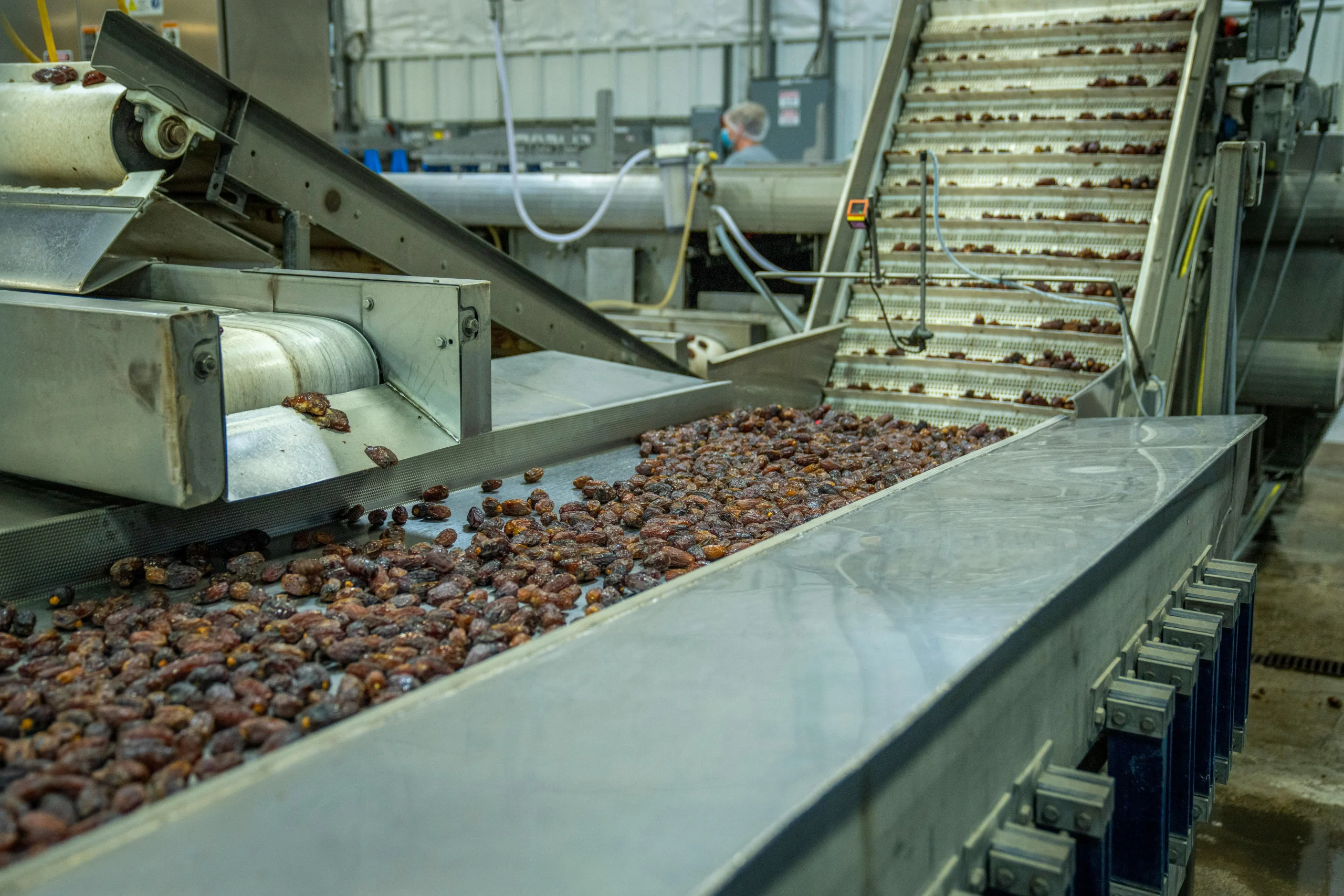
At its core, juice concentration is not about removing water — it is about preserving the natural value of the fruit. Flavor integrity, color stability, sugar balance, and functional performance must all be maintained so that the concentrate performs reliably in beverages, bakery, desserts, and other food applications.
Everything starts with the fruit — even when it is dried. Dried fruits are not standardized commodities; they carry their own variability, influenced by origin, variety, maturity at harvest, and drying conditions. These parameters directly affect sugar composition, acidity, color, and aroma once the fruit is rehydrated.
The role of the processor is therefore not to eliminate this natural variability, but to understand it and manage it intelligently. Through controlled sourcing and long-term partnerships, as described in our approach to ensuring consistency at scale, we build the foundation for stable, high-quality fruit juice concentrates. Quality always begins with raw material knowledge.
Producing juice from dried fruits first requires a precise rehydration and extraction phase. This step is critical: it determines how well soluble solids, natural sugars, aromas, and functional components are recovered. Too aggressive extraction can damage flavor; insufficient extraction can lead to weak profiles and inconsistent performance.
The subsequent concentration process requires equally careful technological choices. Temperature, evaporation method, and residence time all influence the final outcome. These parameters directly affect flavor balance, color stability, mouthfeel, and microbiological safety. Even small adjustments can lead to noticeable differences in the final concentrate, especially in sensitive applications such as beverages or clean label formulations.
In fruit processing, yield is often considered a key performance indicator. However, focusing solely on yield can compromise the very elements that make fruit valuable: its natural taste, texture, and stability. Over-extraction may increase volume, but it often results in diluted flavors or unwanted notes.
At the same time, aiming for maximum quality without considering industrial constraints is not sustainable. The real challenge lies in finding the right balance between efficiency and respect for the fruit. This balance ensures that the concentrate performs reliably in its final application, whether it is used in fruit juice concentrates, blended formulations, or complex food matrices.
Food and beverage manufacturers expect consistent ingredients, batch after batch, throughout the year. Yet fruit-based products naturally vary, even when working with dried fruits. Sugar levels, acidity, and color can fluctuate depending on raw material behavior.
Consistency is achieved through continuous monitoring, process control, and experience. It is not about forcing standardization, but about making intelligent adjustments to maintain a stable sensory and functional profile. This philosophy aligns with our broader work on Brix management, where balance and precision are essential to product performance.
Producing fruit juice concentrates is not a fixed recipe that can be applied universally. It is a process refined over time, shaped by raw material behavior, technological expertise, and practical experience. Each fruit behaves differently, and each application places unique demands on the ingredient.
At Solufruit, our know-how has been built through years of working closely with food manufacturers, understanding their constraints, and adapting our processes accordingly. Whether through our expertise in fruit-based ingredients or our commitment to sustainable processing, quality is never assumed — it is actively managed every day.
Producing fruit juice concentrates involves far more than rehydration and evaporation. It requires deep knowledge of raw materials, precise process control, and the ability to adapt continuously to natural variability. In an industry where reliability and clean label performance are essential, quality cannot simply be declared.
It must be understood, monitored, and refined — day after day. This is how we ensure that every fruit juice concentrate delivers the consistency, functionality, and authenticity that modern food applications demand.